خصم 20% على جميع المنتجات، يطبق عند الدفع

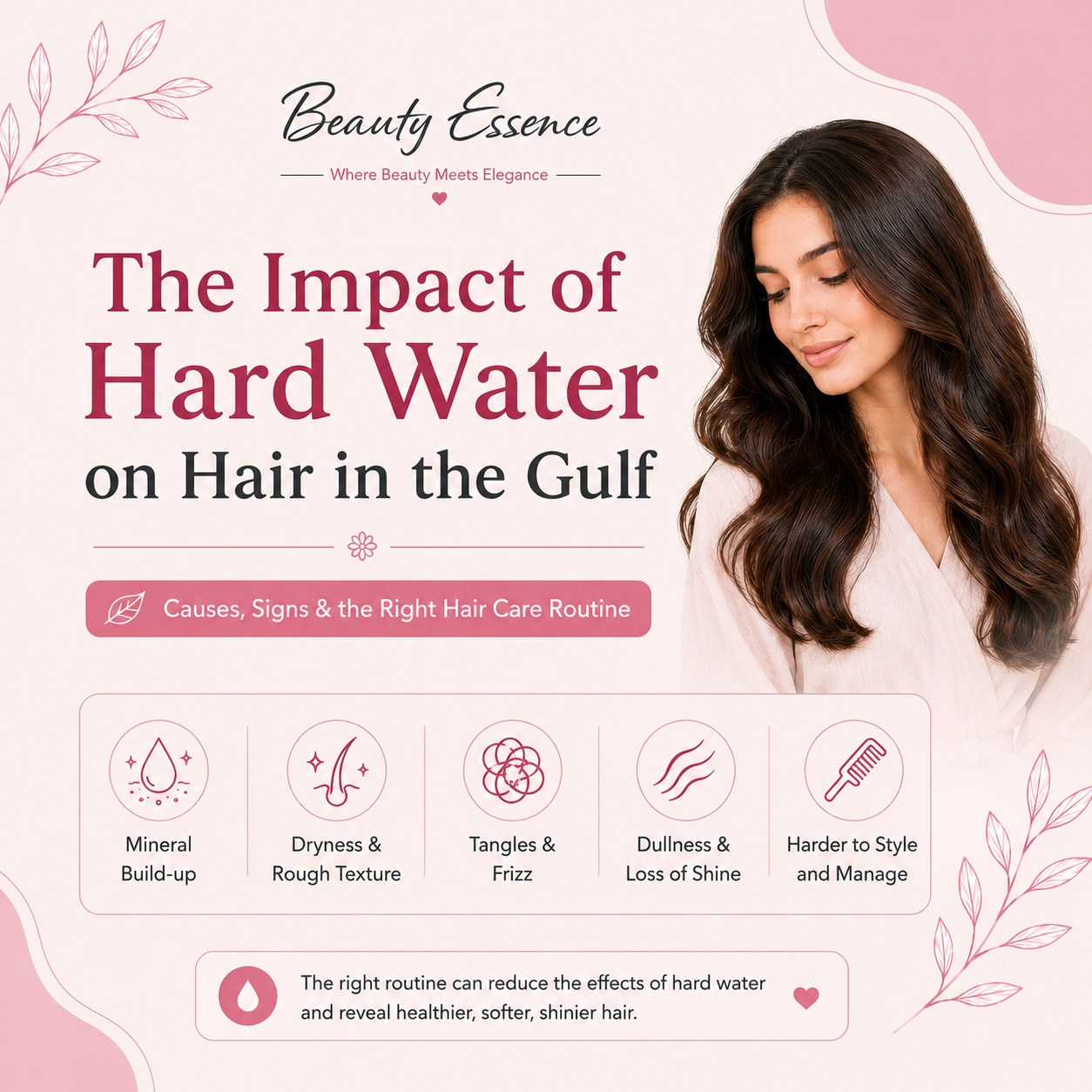
The Impact of Hard Water on Hair in the Gulf

The hard water impact on hair usually appears when your hair feels rougher after washing, looks dull, or becomes harder to style even though your routine has not changed. In the Gulf, mineral buildup may become more noticeable because of water quality, heat, air conditioning, and frequent washing. This guide explains what hard water means, how it affects the hair, how to tell it apart from product buildup, and how to create a balanced routine with options like Pro Shampoo, Peptide Shampoo, Peptide Mask, and Recovery Magic Spray.
Hard Water Impact on Hair: How Does It Show?
The hard water impact on hair often starts slowly. You may not notice it after one wash, but over time your hair may start feeling different. The same shampoo may not give the same result. Your conditioner may feel less effective. Your hair may look clean, but still feel heavy, dry, or difficult to manage.
Hard water contains higher levels of minerals such as calcium and magnesium. These minerals can leave residue on the hair after repeated washing. This does not always mean the hair is damaged, but it can affect the way hair feels, moves, and responds to products. That is why understanding the relationship between hard water and hair is important, especially in areas where mineral buildup is common.
One of the clearest signs is dullness. Hair may lose its natural shine and appear less fresh after washing. Another sign is dryness, especially at the ends. You may also notice that your hair tangles more easily, feels rough after showering, or takes longer to style.
The hard water impact on hair can also show as heaviness. Your hair may feel washed, but not fully refreshed. The roots may become oily faster, while the ends still feel dry. This mixed feeling can be confusing because it looks like the hair needs both cleansing and moisture at the same time.
Many people mistake this issue for normal dryness. Regular dryness can come from heat styling, coloring, sun exposure, or the natural hair type. But dry hair from water often appears right after washing. If your hair feels rough immediately after the shower, even when you use conditioner, hard water may be one of the possible reasons.
Colored hair may show the effect faster. If your hair is dyed or lightened, mineral buildup can make it look less vibrant and harder to style. This does not mean the color is ruined, but it means the hair may need a more balanced routine that includes proper cleansing and care after washing.
Curly and wavy hair may also react strongly. Curls can lose definition, become frizzy, or tangle more after washing. In this case, adding more heavy products is not always the answer. Sometimes the hair needs a better cleansing step before adding creams, oils, or leave-in products.
The best first step is observation. Watch your hair for two weeks. Does it feel rough after every wash? Does it behave better when you travel? Do products work less effectively than before? Does your hair feel heavy even after shampooing? These questions help you understand the hard water impact on hair without changing your whole routine too quickly.
Hard Water Impact on Hair in Saudi Arabia and the Gulf
The hard water impact on hair can be more noticeable in Saudi Arabia and the Gulf because hair is exposed to more than water alone. Heat, air conditioning, dust, humidity in some cities, frequent washing, hair coloring, and styling tools all affect the hair. When mineral buildup is added to these factors, the hair may feel drier, heavier, or harder to manage.
In some areas, you may notice that your hair changes when you move from one city to another or when you travel. Your hair may feel softer in one place and heavier or rougher in another. This does not always mean your products stopped working. It may simply mean the water quality is different.
Many women in the Gulf wash their hair frequently because of the weather, workouts, scalp sweat, styling products, or daily routines. With repeated washing, minerals from hard water may build up gradually. This is why a Gulf haircare routine should not focus on moisture only. It also needs a smart cleansing step when buildup appears.
A common mistake is treating the problem as dryness only. When signs of hard water damage to hair appear, it is easy to add more masks, oils, serums, or creams. But if the hair already has mineral or product buildup, adding more products can make it feel heavier instead of softer.
Hair under the hijab may also need a more thoughtful routine. Hair can be covered for long hours, and the scalp may be affected by sweat, friction, or humidity. When washing with hard water is added to this, the hair may feel heavier or drier. This does not mean using strong shampoo daily. It means choosing the right balance between cleansing the scalp and caring for the lengths.
Colored hair needs extra care. The hard water impact on hair may make colored or lightened hair look dull, especially if the hair is already exposed to heat styling. The routine should support both cleansing and after-wash care, without overloading the hair with too many products.
For curly or wavy hair, the issue may appear as frizz, tangling, or loss of curl shape. This type of hair often needs hydration, but it can also be affected by buildup. A routine that combines gentle cleansing, conditioning, and a suitable after-shower product can help the hair look more controlled.
Salon professionals may also notice this issue in clients. A client may come in with colored hair, heat-stressed hair, or hair that does not respond well to masks. In these cases, understanding the hard water impact on hair helps the stylist choose the right service and recommend a better home routine.
The goal is not to create a complicated routine. For the Gulf market, the best approach is practical: a suitable shampoo, conditioner or mask when needed, a light after-shower product, and fewer heavy layers. This helps manage the effect of hard water without making the routine difficult to follow.
Hard Water Impact on Hair vs. Product Buildup
One reason the hard water impact on hair is confusing is that it can look similar to product buildup. Both can make the hair look dull, heavy, or harder to style. However, they are not the same, and understanding the difference helps you choose the right solution.
Product buildup happens when oils, creams, serums, leave-in conditioners, dry shampoos, or styling products remain on the hair over time. Hard water buildup comes from minerals in the water, especially when the hair is washed repeatedly with mineral-rich water.
Sometimes both happen together. For example, if your routine includes several styling products and you wash your hair with hard water, your hair may carry both product residue and mineral buildup. In this case, adding more products may not help. The routine needs to be simplified and balanced.
| Sign | May Indicate Hard Water | May Indicate Product Buildup |
| Dull hair after washing | Yes | Yes |
| Heavy feeling despite shampooing | Yes | Yes |
| Dry ends after showering | Yes | Sometimes |
| Roots become oily quickly | Sometimes | Yes |
| Products stop working well | Yes | Yes |
| Problem gets worse after oils or creams | Sometimes | Yes |
| Problem appears even with a simple routine | Yes | Less likely |
If your hair feels heavy after using certain oils, creams, or leave-in products, product buildup may be the main issue. If your hair still feels different even when you reduce products, then hard water may be part of the problem.
The solution is not to cleanse aggressively every time. Over-cleansing can make hair drier, especially if it is colored, curly, or naturally dry. Instead, include a suitable cleansing step when needed, then follow with conditioner, mask, or after-shower care depending on your hair condition.
If your hair is dry by nature, do not turn every wash into a deep-cleansing wash. A balanced routine is better: regular cleansing, occasional buildup management, and moisture where the hair needs it most.
Understanding the difference between product buildup and the hard water impact on hair helps you avoid changing products too often. Sometimes one small change is enough. For example, simplifying your after-shower products or adjusting your shampoo schedule may make the hair feel lighter.
Hard Water Impact on Hair and the Right Routine
Managing the hard water impact on hair requires balance. You do not need to replace your whole routine at once. Start by reviewing your current steps: how often you wash, how many products you use, whether your hair is colored, and how often you use heat.
The first step is choosing a suitable shampoo. If your hair feels heavy, dull, or affected by buildup, Pro Shampoo can be linked as part of a cleansing routine, depending on the hair’s needs and product instructions. The goal is to cleanse effectively without making the hair feel stripped.
The second step is care after shampoo. After cleansing, hair may need conditioner or a mask depending on its condition. Peptide Shampoo and Peptide Mask can be connected to a Maya Innovate routine for hair that needs care after washing, especially if the ends feel dry.
The third step is after-shower care. If your hair tangles easily or becomes hard to style, Recovery Magic Spray can be introduced after washing according to the product usage instructions. This step helps support easier styling without adding too many heavy products.
The fourth step is reducing product overload. If you use oil, serum, cream, and leave-in products all at once, it becomes difficult to know what is causing heaviness. Try simplifying your routine for a short period and observe how your hair responds.
| Routine Step | Goal | Suggested Product Link |
| Washing | Cleanse daily residue and buildup | Pro Shampoo |
| Post-wash care | Support hair based on condition | Peptide Shampoo, Peptide Mask |
| After shower | Help with styling and tangles | Recovery Magic Spray |
| Weekly care | Support dry ends when needed | Peptide Mask |
| Evaluation | Understand if the routine works | Observe hair for two weeks |
If your hair is colored, avoid frequent strong cleansing. Colored hair needs balance so it does not feel drier. If your roots are oily and your ends are dry, apply shampoo to the scalp and use mask or conditioner on the lengths and ends only.
Use lukewarm water instead of very hot water. Hot water may increase the feeling of dryness, especially when hard water is already affecting the hair. After washing, dry the hair gently and apply a suitable after-shower product if needed.
A simple weekly structure may look like this:
| Timing | Routine Step |
| First wash | Pro Shampoo as needed + post-wash care |
| After washing | Recovery Magic Spray according to hair type |
| Midweek | Suitable shampoo + conditioner or mask |
| End of week | Peptide Mask if hair needs extra care |
| Every two weeks | Evaluate hair and adjust the routine |
This approach makes the hard water impact on hair easier to manage. The routine stays simple, practical, and suitable for the Gulf lifestyle.
Read Now: Damaged Hair Treatment: A Home Repair Routine for Hair Affected by Color and Heat
Hard Water Impact on Hair by Hair Type
The hard water impact on hair does not look the same for everyone. Hair type, color history, porosity, styling habits, and heat exposure all change how the problem appears. That is why the routine should be adjusted by hair type.
Dry hair may feel rougher after washing. It may seem like the conditioner is not enough or the mask is not giving the usual result. This type of hair usually needs moderate cleansing, a suitable mask, and an after-shower product.
Oily hair may feel heavy at the roots. The scalp may not stay fresh for long, or the hair may need washing sooner than usual. In this case, avoid applying masks, oils, or heavy products to the roots. Focus care on the lengths and ends.
Colored hair needs more careful handling. Mineral buildup may make colored hair look duller or harder to style, especially with lighter colors. The routine should include balanced cleansing and post-wash care.
Curly and wavy hair may become more tangled or lose shape. This hair type often needs moisture, but heavy product layering can make curls feel weighed down. A mask and a suitable leave-in or spray can be helpful when used correctly.
| Hair Type | How the Impact Appears | Suitable Routine |
| Dry hair | Roughness and dry ends | Suitable shampoo + mask + after-shower product |
| Oily hair | Heavy roots | Scalp-focused shampoo + light care for ends |
| Colored hair | Dullness and harder styling | Balanced cleansing + after-wash care |
| Curly hair | Tangling and less definition | Mask + leave-in product |
| Heat-styled hair | Tired ends | Weekly care + less heat exposure |
Heat-styled hair needs special attention. Blow-drying, curling, or straightening can make the ends feel drier, and hard water may make this more noticeable. This is where a routine with Recovery Magic Spray and Peptide Mask can be naturally linked.
If your hair is very fine, avoid heavy layers. If your hair is thick or curly, you may need more after-shower care, but without product overload. The key is steady observation and gradual adjustment.
Hard Water Impact on Hair and Recommended Products
Choosing the right products can make the hard water impact on hair easier to manage. The goal is not to buy many products. The goal is to choose products with clear roles: cleansing, care, moisture, styling support, or weekly treatment.
Pro Shampoo can be linked to the cleansing step. When discussing heaviness, dullness, or buildup, it can be positioned as part of a suitable cleansing routine depending on hair needs.
Peptide Shampoo can be linked when discussing an overall care routine, especially for hair that needs support after washing. It works well within a Maya Innovate routine depending on hair type and product instructions.
Peptide Mask fits the weekly care step, especially for hair that feels dry or has tired ends. It should be used according to the product instructions without overuse.
Recovery Magic Spray fits the after-shower step, especially when hair tangles easily or becomes difficult to style. It can be mentioned naturally after explaining the problem of hair after washing.
| Product | Place in Article | Natural Link Context |
| Pro Shampoo | Cleansing step | When discussing washing and buildup |
| Peptide Shampoo | Basic care routine | When choosing a suitable shampoo |
| Peptide Mask | Weekly care | When discussing dryness and ends |
| Recovery Magic Spray | After shower | When discussing styling and detangling |
The products should be mentioned naturally, not as a forced sales pitch. The reader first needs to understand the issue, then see how the routine can be arranged.
For a clearer routine with hard water, explore Maya Innovate options such as Pro Shampoo, Peptide Shampoo, Peptide Mask, and Recovery Magic Spray, and choose what suits your hair condition.
Read Now: Hair Loss Treatment for Women: An Effective Routine and the Best Products
Mistakes That Make the Hard Water Impact on Hair Worse
Some daily habits can make the hard water impact on hair more noticeable. The first mistake is layering too many products. Oils, serums, creams, and leave-ins can be useful, but using many at once may leave residue and make the hair heavier.
The second mistake is using very hot water. Hot water may increase dryness, especially for colored or naturally dry hair. Lukewarm water and gentle towel drying are better choices.
The third mistake is changing products too quickly. If you change shampoo every week, you will not know whether the issue comes from water, product choice, or usage method. Give your routine enough time before judging it.
The fourth mistake is applying conditioner or mask to oily roots. If your scalp gets oily quickly, applying rich products to the roots can increase heaviness. Apply shampoo to the scalp and apply mask or conditioner to the lengths and ends.
The fifth mistake is skipping after-shower care. If your hair tangles or becomes hard to style, you may need a product after washing. Recovery Magic Spray can be included depending on the hair type and product directions.
The sixth mistake is over-cleansing. Trying to remove buildup with strong washing too often may make the hair drier. Balance matters more than the number of steps.
The seventh mistake is relying on oils only. Oil may improve the look temporarily, but it does not solve buildup. If the hair already feels heavy, using more oil may make the issue worse.
The eighth mistake is ignoring the scalp. The scalp is part of the routine. If it feels oily, itchy, or heavy quickly, adjust your washing method and avoid heavy products near the roots.
Read Now: Thin Hair Routine: How to Make Your Hair Look Fuller in 4 Weeks
FAQ
What is the hard water impact on hair?
The hard water impact on hair usually appears as dryness, dullness, heaviness after washing, or difficulty styling. It may happen because minerals in the water leave residue on the hair over repeated washes.
How do I know if hard water is affecting my hair?
If your hair changes right after washing, feels less responsive to conditioner or mask, or feels heavy despite shampooing, hard water may be one possible reason.
Can hard water make hair dry?
Yes, hard water may contribute to a dry feeling in some hair types, especially with repeated washing, coloring, heat styling, or lack of after-shower care.
What is the difference between hard water and product buildup?
Hard water buildup comes from minerals in water, while product buildup comes from oils, creams, serums, or styling products. Sometimes both happen together.
Do I need a special shampoo for hard water?
You may need a suitable cleansing shampoo from time to time depending on your hair condition. Pro Shampoo can be included in the routine according to the hair’s needs and product instructions.
Does a hair mask help with the hard water impact on hair?
A mask does not remove the cause by itself, but it can support the hair after washing, especially if it feels dry or needs extra care. Peptide Mask can be used according to the product directions.
How often should I change my routine if I have hard water?
Do not change too quickly. Try a simple routine for around two weeks and observe your hair after washing, styling, and product use.
What is the best routine after washing hair with hard water?
A simple routine may include a suitable shampoo, conditioner or mask when needed, and an after-shower product such as Recovery Magic Spray to help with styling and tangles.
Choose Your Routine with Beauty Essence
Understanding the hard water impact on hair helps you manage the issue with more clarity. Instead of changing every product or adding too many steps, start with a simple routine: suitable cleansing, post-wash care, a weekly mask when needed, and an after-shower product depending on your hair type.
With Beauty Essence, you can build your routine with Maya Innovate options such as Pro Shampoo, Peptide Shampoo, Peptide Mask, and Recovery Magic Spray, based on what your hair needs.
Start a care routine that suits hair in the Gulf, and explore Beauty Essence products to choose the steps closest to your hair condition. products to choose the steps closest to your hair condition.