خصم 20% على جميع المنتجات، يطبق عند الدفع

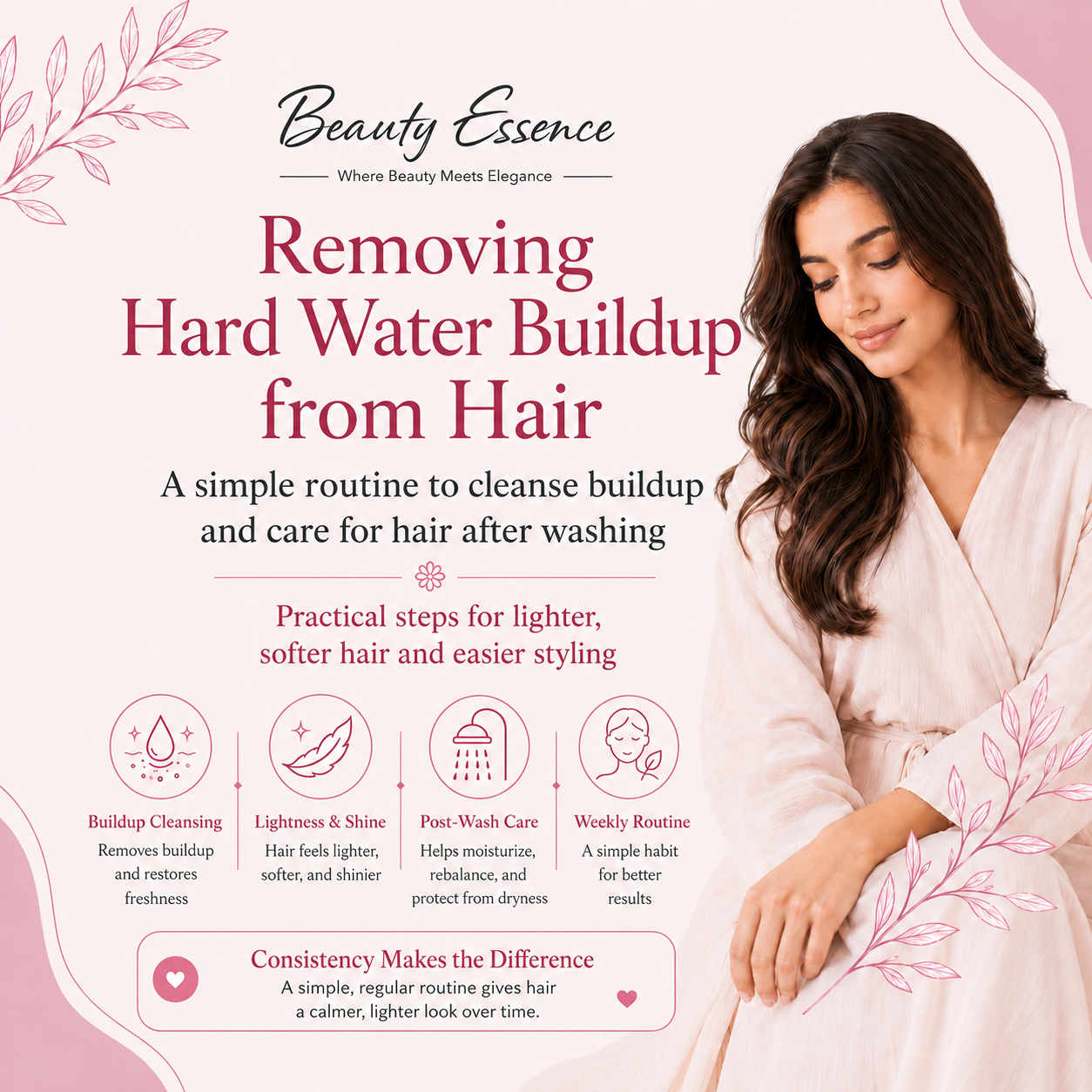
Removing Water Deposits from Hair Without Stress

Removing water deposits from hair starts when your hair feels heavier after washing, less responsive to masks, or more tangled even though your routine has not changed. In Saudi Arabia and the Gulf, mineral-rich water, hard water, or salty water can leave residue on the hair over time. This may lead to dullness, roughness, and styling difficulty. This guide explains the signs of water residue on hair, how to clean water deposits from hair at home, and how to choose a suitable routine with Pro Shampoo, Peptide Shampoo, Peptide Mask, and Recovery Magic Spray.
When Do You Need to Remove Water Deposits from Hair?
You may need to start removing water deposits from hair when your hair begins to look or feel different after washing. The shampoo may be the same, the mask may be the same, and your drying method may not have changed, but the result still feels different. Sometimes the hair becomes dull, heavier at the roots, harder to comb, or less responsive to the products that used to work well.
Water residue on hair does not always appear after one wash. In many cases, it builds up gradually with repeated washing, especially when the water contains minerals or salts. Over time, these deposits may sit on the hair and make your usual hair care products feel less effective. This is why the solution is not always changing every product, but understanding what is happening to the hair first.
One of the most common signs that you may need cleaning water deposits from hair is roughness after showering, even after using conditioner or a hair mask. The ends may also feel drier, tangling may increase, or combing may become harder than usual. These signs do not always mean severe damage, but they can show that your routine needs better balance.
Dull hair from water is more noticeable on colored or lightened hair. The color may look less fresh, and the ends may become dry faster. Colored hair is usually more sensitive to changes in water quality, product buildup, and heat styling, so it needs a calmer approach when removing water deposits from hair.
Curly or wavy hair may show the issue differently. Instead of only looking dull, the curls may lose shape, frizz may increase after washing, or styling products may not perform as they did before. In this case, adding more creams is not always the first answer. Sometimes the better start is removing water deposits from hair before adding more styling products.
Fine hair may also be affected quickly. If the hair loses volume after washing or feels heavy from the roots, water residue mixed with product buildup may be part of the reason. Fine hair needs smaller amounts of after-wash products so the heaviness does not return quickly.
| Sign | What it may mean | What to do |
| Dullness after washing | Possible water residue or buildup | Watch your hair after each wash |
| Rough ends | Hair needs cleansing, then care | Use a suitable mask on the lengths |
| Heavy roots | Residue or product buildup near the scalp | Focus shampoo on the scalp |
| Faster tangling | Hair is not responding well to care | Keep the routine simple |
| Weak mask results | Buildup may reduce product performance | Add a cleansing wash when needed |
The main point is not to treat removing water deposits from hair as a harsh or daily step. The goal is to cleanse at the right time, then follow with suitable care. If the hair already feels heavy, adding too many oils, creams, or leave-in products may increase the heaviness. Start by observing the signs, then cleanse, then care for the hair based on its actual condition.
Removing Water Deposits from Hair at Home
Removing water deposits from hair at home can be simple when the steps are organized. Many people focus only on the shampoo, but the way you use it, how well you rinse, and what you apply after washing all affect the final result.
The first step is understanding your hair condition. Ask yourself: Did the issue start after changing the water source? Did tangling increase after the beach or swimming pool? Does your hair feel less responsive to the mask? Do the roots become heavy quickly? These questions help you decide whether the problem is closer to water residue on hair, product buildup, dryness, or a mix of all three.
After identifying the signs, the next step is shampoo. Pro Shampoo can be included in a routine for cleaning water deposits from hair, depending on your hair condition and the product’s usage instructions. The idea is not to use a cleansing shampoo in every wash, but to include it when signs like heaviness, dullness, or weak product response appear.
How you apply shampoo matters. Focus on the scalp and roots, and massage gently. The ends do not need strong rubbing, because the shampoo foam will pass through the lengths while rinsing. Rough rubbing can increase tangling, especially if the hair is dry, colored, or already sensitive.
After shampooing, give rinsing enough time. Sometimes the issue is not the shampoo itself, but leftover product that remains on the hair. A quick rinse may leave the hair feeling heavy, even if the product is suitable. Use lukewarm water and make sure the lengths and the back sections of the hair are rinsed well.
After removing water deposits from hair, do not leave the hair without care if it feels dry or tangled. Peptide Mask can be applied to the lengths and ends according to your hair’s needs. Avoid applying the mask to the roots if your scalp is oily or if your hair loses volume quickly after washing.
If the hair is difficult to style after showering, Recovery Magic Spray can be used according to the product instructions. Apply it to the lengths after gently towel-drying the hair, using a suitable amount. The goal is to make styling easier, not to overload the hair with too many products.
| Step | Goal | Suitable product |
| Understand your hair condition | Identify the reason behind heaviness or dullness | Observe the hair after washing |
| Shampoo | Remove water deposits and buildup | Pro Shampoo |
| Rinse | Remove product leftovers | Lukewarm water and enough rinsing time |
| Care | Support the ends after cleansing | Peptide Mask |
| After washing | Make styling easier when needed | Recovery Magic Spray |
Do not use all your hair products in the same wash. After cleaning water deposits from hair, choose one or two steps only based on your hair condition. For example, use a mask on the ends, a spray after washing, or a simple care step if your hair does not need more. Too many products can bring back the heavy feeling quickly.
If your hair is fine, use small amounts of after-wash products. If your hair is thick or curly, it may need more care, but the products should still be distributed well and kept away from the scalp if it becomes oily easily. Every hair type needs a different balance, so there is no single routine that suits everyone.
Removing Water Deposits from Hair Before Applying Hair Care
Removing water deposits from hair before applying hair care is important because masks, oils, and leave-in products may not work well on hair that is covered with residue. Sometimes the issue is not that the mask is unsuitable, but that buildup is limiting how well the hair responds to it.
When there is water residue on hair, you may notice that the mask no longer gives the same result. The hair may remain rough, the ends may still tangle, or the overall appearance may look dull. In this case, cleaning water deposits from hair first may make more sense than adding more care products.
Before applying a mask or a more intensive care routine, observe your hair. Does it feel heavy? Do the roots lose freshness quickly after washing? Are the ends dry even after using care products? Do the products feel less effective than before? If these signs repeat, a well-timed cleansing wash may be the better first step.
Pro Shampoo can be used here as a cleansing step before care, especially when there is visible heaviness or dullness. After that, Peptide Mask can be applied to the lengths and ends, especially if the hair is dry, colored, or has been exposed to salty water. The order matters: cleanse, rinse, care, then apply an after-wash product only if needed.
Peptide Shampoo can be used in regular washes between cleansing days. Not every wash needs to focus on removing deposits. Hair needs balance between cleansing and care, especially in hot weather, with frequent washing, or with regular exposure to air conditioning.
Recovery Magic Spray fits into the after-wash stage when the hair is more likely to tangle. However, it does not replace cleansing if there is residue. It is a post-wash step, while removing water deposits from hair starts with washing, rinsing, and then applying suitable care.
| Before hair care | What to do | Important note |
| If hair looks dull | Add a cleansing wash when needed | Do not repeat it without reason |
| If the ends are dry | Use a mask on the lengths | Avoid oily roots |
| If hair tangles | Use a spray after washing | A suitable amount is enough |
| If hair is fine | Reduce after-wash products | Focus on the ends |
| If hair is colored | Keep cleansing gentle | Reduce high heat styling |
Removing water deposits from hair before care makes your routine more accurate. Instead of changing products quickly, you can understand whether the issue is buildup or whether your hair needs a different level of care. This makes the routine easier to evaluate and gives every step a clear purpose.
Removing Water Deposits from Hair After Salty Water
Hair needs a different approach after exposure to salty water, especially after the beach, pools, or travel. Salty water can make the hair feel drier and more tangled, and dull hair from water may appear faster if salt remains on the hair for too long.
The first step after salty water exposure is rinsing with fresh water as soon as possible. Do not wait for hours if you are able to rinse your hair. This step helps reduce the amount of salt left on the hair and may make tangling easier to manage. After rinsing, avoid aggressive brushing, because wet hair can tangle more easily.
When you return home, choose the routine based on your hair condition. If the hair feels heavy or rough, Pro Shampoo can be included in your routine for removing water deposits from hair, followed by Peptide Mask on the lengths and ends. If the hair does not need strong cleansing, a regular care wash may be enough.
Colored hair after salty water needs extra care. Do not repeat cleansing washes too often, and avoid high heat styling after every wash. The goal is to reduce the effect of residue without increasing dryness. This is why a mask is an important step after cleansing.
Curly hair after the beach may lose curl shape or become frizzier. Do not start by applying large amounts of styling products. Start with rinsing, then cleanse when needed, then apply care, and finally use a suitable after-wash product in a controlled amount.
| Condition after salty water | Suitable step | Note |
| Fast tangling | Rinse well, then apply care | Do not brush aggressively |
| Noticeable roughness | Cleansing wash when needed | Follow with a mask on the ends |
| Dull-looking hair | Use a residue-focused routine | Observe the result for two weeks |
| Colored hair | Gentler cleansing and more care | Reduce heat styling |
| Curly hair | Cleanse, then care carefully | Do not add too many products |
Removing water deposits from hair after salty water does not depend on one step only. The faster and gentler the care is, the easier it is for the hair to return to its usual routine. The most important point is not to leave salt on the hair for too long and not to cover dryness with too many products at once.
If you go to the beach often or your hair is regularly exposed to salty water while traveling, make rinsing a consistent step whenever possible. Then organize your care routine after returning home. This helps prevent salty water from becoming a repeated reason for roughness, dullness, or heaviness.
Removing Water Deposits from Hair with a Weekly Routine
The best way to apply removing water deposits from hair is to build a practical weekly routine. A weekly plan prevents random product use and gives every product a clear role. Shampoo should not be the only solution, and a mask should not replace cleansing. Each step should come at the right time.
At the beginning of the week, if you notice that the hair feels heavy or dull, Pro Shampoo can be used as part of a cleansing wash for cleaning water deposits from hair. After that, rinse well, then apply Peptide Mask to the lengths if the hair needs care after cleansing.
In the middle of the week, Peptide Shampoo can be used as a regular care wash. This step helps keep the routine balanced, especially if the hair does not need residue removal in every wash. After that, you can use a conditioner or mask according to your hair condition.
At the end of the week, observe your hair. If the ends are dry or the hair tangles easily, Peptide Mask can be used according to your hair needs and the product instructions. After washing, Recovery Magic Spray can be applied if the hair needs easier styling.
| Day or stage | Step | Goal |
| Beginning of the week | Pro Shampoo when needed | Removing water deposits from hair |
| After cleansing | Peptide Mask | Care for lengths and ends |
| Middle of the week | Peptide Shampoo | Balanced care wash |
| End of the week | Mask when needed | Reduce dryness and tangling |
| After washing | Recovery Magic Spray | Easier styling |
This table is not a strict rule for everyone. Oily hair may need more frequent washing, dry hair may need fewer cleansing washes, and curly hair may need different after-wash care. Use the table as a general guide, then adjust it based on your hair’s response.
Do not judge the routine after one wash only. Observe your hair for two weeks. Does it feel lighter after washing? Are the ends less rough? Is tangling reduced? Does the mask work better? These questions help you decide whether the routine is suitable or needs adjustment.
| Follow-up question | What it tells you |
| Does the hair feel lighter after washing? | Whether the cleansing step is suitable |
| Are the ends less dry? | Whether the mask is suitable |
| Do the roots become heavy quickly? | Whether you are using too much product |
| Is tangling reduced? | Whether Recovery Magic Spray is suitable |
| Does the hair look less dull? | Whether residue was affecting the hair |
With this approach, removing water deposits from hair becomes part of a practical hair care system, not a repeated step without purpose. Organization matters more than using many products, because hair needs to be understood before adding new steps.
Removing Water Deposits from Hair by Hair Type
Water residue does not appear the same way on everyone, so removing water deposits from hair should be adjusted according to hair type. Dry hair does not need the same routine as oily hair, colored hair needs a calmer approach, and curly hair needs specific after-wash care.
Dry hair may show residue buildup through roughness and tangling. In this case, do not repeat cleansing washes too often. Use Pro Shampoo only when needed, then follow with Peptide Mask on the lengths and ends. Avoid hot water, because it may increase dryness.
Oily hair may show the issue at the roots. You may feel that the scalp becomes heavy quickly or that the hair does not stay fresh after washing. Here, focus shampoo on the scalp and avoid applying masks or rich products near the roots.
Colored hair needs balance. Removing water deposits from hair for colored hair should not include excessive cleansing. Use a cleansing wash when needed, then follow with suitable care for the ends, and reduce high heat styling after washing.
Curly hair may be affected by residue through frizz and loss of curl shape. Do not apply too many styling products immediately. Start with suitable cleansing, then use a mask or after-wash care, then apply a styling or leave-in product only when needed.
Fine hair may become heavy quickly from any extra product. Use a small amount of mask and focus on the ends. Recovery Magic Spray can be used in a suitable amount so the hair does not lose its natural movement.
| Hair type | How residue may appear | Suitable routine |
| Dry | Roughness and tangling | Cleanse when needed + mask |
| Oily | Heavy roots | Scalp cleansing + care for ends |
| Colored | Dullness and dryness | Balanced cleansing + mask |
| Curly | Frizz and loss of curl shape | Organized cleansing + after-wash care |
| Fine | Fast heaviness | Small amounts and selected products |
Choosing the routine by hair type makes removing water deposits from hair more accurate. Instead of using the same steps for everyone, the shampoo, mask, and after-wash products can be adjusted according to what the hair actually needs.
Suitable Products for Removing Water Deposits from Hair
Choosing the right products makes removing water deposits from hair easier and less random. The important point is that every product should have a clear role in the routine instead of applying many products without order. This is where cleansing, care, and after-wash support work together.
Pro Shampoo can be linked to the cleansing step, especially when the hair shows heaviness, dullness, or weak response to products. It should be used according to the hair’s need and the product instructions, not necessarily in every wash.
Peptide Shampoo can be used in regular washes between cleansing days. It gives the hair a care-focused wash on the days when a deeper cleansing wash is not needed. This helps keep the routine balanced.
Peptide Mask is suitable for the lengths and ends after cleansing, especially if the hair is dry or tangles quickly. It is better not to apply it to the roots if the scalp is oily, because the roots usually need cleansing more than rich care.
Recovery Magic Spray suits the after-wash stage, especially for hair that needs easier styling or tangles after showering. Use it according to the product instructions and apply a suitable amount to the lengths.
| Product | Role in the routine | Where it fits |
| Pro Shampoo | Cleansing residue and buildup | When heaviness or dullness appears |
| Peptide Shampoo | Regular care wash | Between cleansing days |
| Peptide Mask | Care for lengths and ends | After a cleansing wash |
| Recovery Magic Spray | After-wash styling support | After gentle towel-drying |
With Beauty Essence, you can build a routine based on your hair condition: Pro Shampoo for cleansing, Peptide Shampoo for regular care washes, Peptide Mask for lengths and ends, and Recovery Magic Spray after washing when needed.
This keeps the routine practical and clear. Removing water deposits from hair depends on the order of steps, not on one product alone.
Common Mistakes When Removing Water Deposits from Hair
Some mistakes can make removing water deposits from hair less effective, even when the products are suitable. The first mistake is overusing a cleansing shampoo. Hair does not need a strong cleansing step in every wash, especially if it is dry or colored.
The second mistake is not rinsing well. Leftover shampoo or mask may make the hair feel heavy and may give the impression that the product is not suitable. Give rinsing enough time after every wash.
The third mistake is applying the mask to the roots. If your scalp is oily or your hair loses volume quickly, apply the mask to the lengths and ends only. The roots need cleansing, while the ends need care.
The fourth mistake is using too many products after cleansing. After removing water deposits from hair, you may think the hair needs a mask, oil, spray, and cream at the same time. This can bring back heaviness quickly. Choose only what the hair needs.
The fifth mistake is rubbing the hair strongly with a towel. After washing, the hair can be more prone to tangling, and strong rubbing may increase frizz. Press gently with a soft towel instead.
The sixth mistake is ignoring salty water. If the hair is exposed to the sea or a pool, rinse it as soon as possible, then use a suitable routine when you return home. Leaving salt on the hair for a long time may increase dryness and tangling.
The seventh mistake is changing the routine too quickly. Give your hair at least two weeks to observe the response, then decide whether the routine needs adjustment.
Frequently Asked Questions
What does removing water deposits from hair mean?
Removing water deposits from hair means organizing your washing and care routine to reduce residue and minerals that may remain on the hair over time, especially with hard water or salty water.
How do I know if my hair needs cleaning water deposits from hair?
You may notice dullness, roughness after washing, faster tangling, heavy roots, or that your mask no longer gives the same result. These signs may point to residue or buildup.
Can water residue on hair cause dryness?
It may increase the feeling of dryness for some hair types, especially dry, colored, or heat-styled hair. That is why the hair needs suitable cleansing followed by proper care.
Is Pro Shampoo suitable for removing water deposits from hair?
Pro Shampoo can be included in a routine for cleaning water deposits from hair depending on the hair condition and product instructions, followed by suitable care.
Should I use Peptide Mask after cleansing?
Peptide Mask is suitable for the lengths and ends after a cleansing wash, especially if the hair is dry or tangles quickly. Avoid applying it to oily roots.
Is Peptide Shampoo a replacement for cleansing shampoo?
Peptide Shampoo fits into regular care washes, while Pro Shampoo fits the cleansing step when needed. Both can be used in the same routine at different times.
When should I use Recovery Magic Spray?
Recovery Magic Spray can be used after washing according to the product instructions, especially if the hair tangles or is difficult to style. Apply a suitable amount to the lengths.
Does removing minerals from hair suit all hair types?
Yes, but the method differs. Dry hair needs less cleansing and more care, oily hair needs more focus on the scalp, and colored hair needs a gentler routine.
How often should I follow a routine for removing water deposits from hair?
It depends on your hair type and the level of buildup. Cleansing is not needed in every wash. The best approach is to observe your hair and use the routine when heaviness or dullness appears.
Start Your Routine with Beauty Essence
Removing water deposits from hair helps you understand your hair more clearly, especially if it is affected by hard water, salty water, or frequent product use. Start by noticing the first signs, then use a cleansing wash when needed, followed by suitable care for the lengths and ends.
With Beauty Essence, you can build a practical routine with Maya Innovate products: Pro Shampoo for cleansing, Peptide Shampoo for regular care washes, Peptide Mask for post-wash care, and Recovery Magic Spray after showering when your hair needs easier styling.
Choose your Beauty Essence routine now and start with simple steps that suit your hair in Saudi Arabia and the Gulf.